Tracked vs wheeled excavators
Is a tracked or wheeled excavator best for your project? We're comparing both types of digger to help you decide.
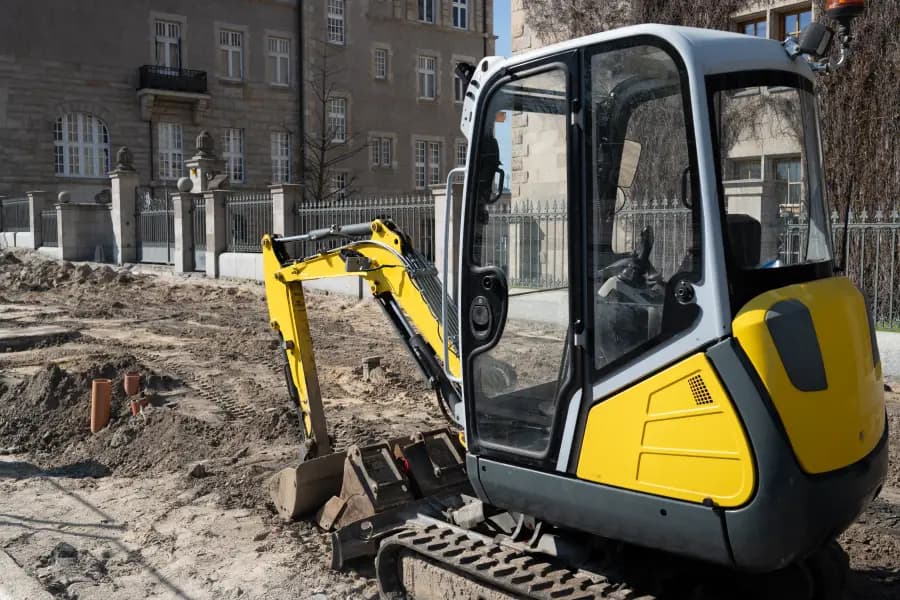
Table of Contents
For many construction and landscaping projects, hiring an excavator is non-negotiable. These powerful machines can make easy work of clearing land, digging holes and shaping terrain. However, a consideration that you need to make is whether to hire a wheeled or tracked excavator for your project. Below we’re discussing the differences, similarities and benefits of each type of excavator to help you decide.
What is a tracked excavator?
As the name suggests, tracked excavators move on tracks rather than wheels. They generally handle rough and soft terrain better than their wheeled counterparts, giving users more stability on uneven ground. This makes them ideal for landscaping and groundworks on muddy, rough ground.
What is a wheeled excavator
Unsurprisingly, a wheeled excavator moves on wheels. Where they differ from tracked excavators is that they work best on even, firm ground. They are likely to lose grip and not be able to move easily on rough terrain. However, where they come in to their own is on their speed and manoeuvrability – as they can be more agile than tracked excavators, particularly on flat surfaces such as roads.
Key considerations when hiring an excavator
For an efficient project, it is vital to choose the correct type of excavator for your needs. The key considerations to make are:
Terrain of site
If the terrain you’re working on is soft, muddy, uneven or sloped, then a tracked excavator will give you the best stability and traction. Tracks are also a better choice for ground that may have shards and rocks that could potentially puncture or damage the tyre of a wheeled excavator.
If the terrain is flat, or in a more urban environment then a wheeled excavator can be the better option. The wheels mean that the excavator can easily drive on roads without damaging asphalt.
Size of project site
If you’re working on a large, flat, site where an excavator will need to move regularly or cover longer distances, a wheeled excavator may be the best option. Where tracked diggers can have top speeds of just 3-5mph, wheeled diggers can move a bit faster at around 20mph.
For large sites with uneven ground where a tracked digger would be the most stable choice – you may need to consider the efficiency of how the excavator will travel around the site, potentially considering multiple excavators for different site areas.
Size of excavator
Wheeled excavators can come in smaller, lighter sizes – known as mini diggers - making it easier for them to enter smaller areas which make them ideal for gardening or smaller residential type construction projects. Tracked excavators typically come in larger sizes.
When to hire a tracked excavator
- Construction projects
- Large-scale utility work
- Infrastructure and road projects
Forestry and off-road projects
When to hire a wheeled excavator
- Road projects with flat terrain
- Light and medium-duty excavation
- Utility work in residential or urban areas
- Landscaping and gardening projects
In summary, a tracked excavator is a great option for larger scale projects on uneven ground whereas wheeled excavators might be better suited for urban projects where you need to drive the excavator on roads.
Hire an excavator for your next project
At National Tool Hire, we work with plant hire suppliers across the UK to provide high-quality excavator hire. Now that you have a better idea of whether you need to hire a wheeled excavator or a tracked excavator, book your hire today.
Related Articles
How to break up a concrete base
Breaking up a concrete base might sound difficult but with the right tools and a bit of know-how it's something that you can do yourself.
How to use a cement mixer
Never used a cement mixer before? Don’t worry! We are here to help guide you through a series of steps about how to use a cement mixer!

How to use acrow props
Find out a little more about acrow props and learn how to use them correctly.